
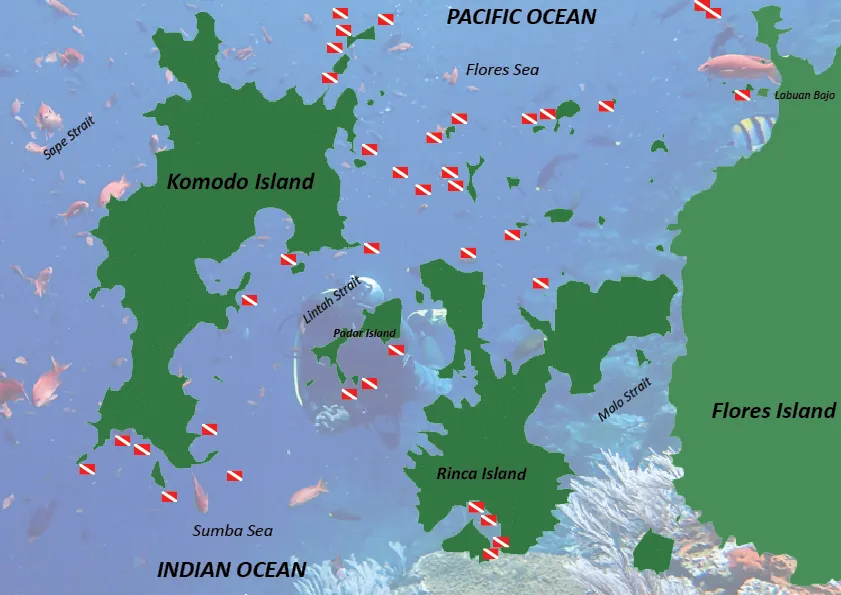
Exploring Batu Bolong:
Reef type: Wall / sloping reef
Max. depth: 40m
Current: mild to very strong
Visibility: 10-35m
A Premier Dive Site.
Batu Bolong, which means “hole in the rock,” is an outstanding dive site known for its rich marine life and geological features. It is a pinnacle that can be seen from the surface, located in the heart of the main passage, and influenced by strong currents on the edges. This world-class site is ranked among the top 10 dive spots, thanks to its diverse underwater ecosystem.
The dive site can only be accessed from the protected lee side, depending on the tide, unless it’s slack tide. The northwest features a wall with crevices and plateaus covered with a variety of coral. It’s best explored during the rising tide. The southeast is a steep slope with a mini wall also covered with diverse corals. It’s best experienced during the falling tide.
The currents provide a diverse range of marine life, including sharks, giant trevally, napoleon wrasse, giant sweetlips, schooling fusilier, surgeonfish, and sometimes surprises with dolphins or manta rays. In the shallower areas, you will be greeted by anthias, moon wrasse, sergeant majors, and many macro critters.
Exploring Makassar Reef:
Reef type: Rubble coral / coral bommies
Max. depth: 15m
Current: mild to very strong
Visibility: 10-30m
Located to the East of Komodo Island, Karang Makassar (also known as Manta Point) is a two-kilometer-long dive site boasting a shallow reef of mainly rubble coral and small hard coral reefs. The cleaning stations are a popular attraction where you can observe majestic Manta Rays cruising and hovering above.
Despite the varying entry- and exit points depending on the tide, you can easily drift along with the mild to very strong current, zigzagging from one cleaning station to the next. While the coral rubble is a haven for critters such as Nudibranchs and Mantis Shrimp, the reef also houses a variety of exciting marine life including Black Tip Reef Sharks, Nurse Sharks, Turtles, and Bump Head Parrotfish.
Please note that we provide a full briefing about Manta encounter rules before the dive.
Exploring Tatawa Besar:
Reef type: Hard coral & soft coral reef
Max. depth: 25m
Current: mild to very strong
Visibility: 10-30m
A Thrilling Underwater Adventure
If you’re a fan of diving, you won’t want to miss Tatawa Besar. This dive site boasts a diverse reef system, including both hard and soft coral, that is home to a variety of reef fish. From Sweetlips to Angelfish, and even Turtles, you’re sure to spot some fascinating creatures on your journey.
As you drift along, keep an eye out into the blue waters where White-tip, Black-tip, and Grey Reef Sharks patrol. Excitingly, you may even catch a glimpse of Manta rays and pods of Dolphins if you’re lucky. The current can vary from mild to very strong, so it’s important to stay alert and enjoy the ride.
As the dive progresses, the reef transforms from a stunning coral garden to stag horn coral city, and finally into a shallow coral garden, perfect for ending the journey and embarking on a safety stop. During this time, take the opportunity to observe macro critters such as Nudibranchs, Leaf Scorpion fish, Mantis Shrimps, and more.
In summary, Tatawa Besar is a must-visit site for both experienced and novice divers. Jump in and enjoy the ride – you won’t be disappointed!
Exploring Tatawa Kecil:
Reef type: Coral slope / overhangs / boulders
Max. depth: 30m
Current: mild to very strong
Visibility: 10-30m
A Dive Site with a Unique and Pristine Topography
Tatawa Kecil is a stunning dive site and one of the best places to dive in Komodo National Park. The site’s distinctive topography makes it stand out, featuring a coral slope, overhangs, and boulders, all covered in hard and soft corals. With a maximum depth of 30m, mild to very strong currents, and visibility ranging from 10-30m, this site offers a unique underwater experience.
Due to its location and strong currents, Tatawa Kecil is not frequently visited, making it a pristine site to explore. The best time to dive is during slack or rising tides, entering from the southwest corner and following the island’s contour.
The site is abundant in marine life, including schooling Jacks, Snappers, Giant Trevally, Napoleon Wrasse, Sweetlips, Batfish, Groupers, and more. Keep an eye out for Mobula Rays or Manta Rays passing by in the blue.
At the end of the dive, enjoy a safety stop at the beautiful coral garden filled with dazzling Anthias.
Discover Sebayur Kecil:
Reef Type: Sandy Slope Reef / Wall
Maximum Depth: 30m
Current: Mild
Visibility: 10-25m
Sebayur Kecil is an ideal dive site for those who are looking for something a little easier. It’s often used as a check, refresher, or training dive because the current is not too strong. You can start your dive from the mooring line or near the shore and follow the sloping reef. This area is home to a variety of sea creatures, including turtles, crocodile fish, scorpionfish, cuttlefish, leaf scorpionfish, frogfish, and more.
For those who are feeling more adventurous, you can choose to jump near the steep wall and explore the deeper waters. Here, you can find schooling trevally, emperor fish, and snappers, as well as white tip sharks sleeping on the sandy bottom. However, be aware of the back eddy current.
Overall, Sebayur Kecil has much to offer for both beginner and experienced divers.
Mini Wall:
Reef type: Wall
Maximum depth: 30m
Current: Mild
Visibility: 10-25m
If you’re looking for adventure, Mini Wall is the perfect diving location for you! Located at Sebayur Kecil, you can explore a wall by going in the opposite direction. As you begin your journey from the mooring line, you’ll spot the sloping Staghorn reef on your right shoulder. As you go deeper, the wall will slowly come into view, starting at around 10 meters and plunging to a maximum depth of 30 meters. While exploring the wall for small critters, keep an eye out for Eagle rays, schooling Fuselier and Bluefin Trevally. Don’t forget to look out to the blue! As you approach the edge of the wall, you’ll feel the current pulling you. At that point, it’s best to turn the dive and ascend towards shallower depths. The shallow plateau reef is perfect for the safety stop. This dive site is suitable for both beginners and advanced divers.
Exploring Siaba Besar:
Reef type: Sandy bottom / Hard coral reef
Max. depth: 25m
Current: mild
Visibility: 10-25m
Siaba Besar is an exciting dive site that offers two distinct options, or a combination of both. At the mooring, divers can explore the sandy bottom and coral bommies, which is a perfect spot to witness various macro critters, including the Flamboyant Cuttlefish, Frogfish, Pipefish, Nudibranchs, Crabs, Shrimps and more. If you’re lucky, you may even spot some Dugongs roaming around the turtle grass. On the other hand, the reef at the edge of the sandy slope is a hub for all kinds of reef fish and is known as Turtle Town. Green turtles often gather around the Staghorn- and Cabbage coral garden, but you will also see Blue Spotted Stingrays, Batfish, Groupers, Sweetlips, White Tip Reef Sharks, Barracudas, and Cuttlefish. If you’re patient and visit during the late afternoon, you might even catch a glimpse of the colorful Mandarin fish, hidden amongst the Staghorn corals. With a maximum depth of 25m, mild currents, and 10-25m visibility, Siaba Besar is a must-visit dive site for any diving enthusiast.
Exploring Siaba Kecil:
Reef type: Hard & soft coral reef
Max. depth: 25m
Current: mild to very strong
Visibility: 10-25m
A Drift Dive Adventure
Experience an exhilarating drift dive along a pristine reef with small overhangs and caverns in Siaba Kecil. The drift can be done on both tides, culminating at opposite protected coral gardens. Commencing the drift with the rising tide will position the reef on your left shoulder, while a falling tide will have the reef on your right. If the current is strong, your instructor may choose a negative entry or a quick descent to reach the reef’s edge. Once you achieve proper buoyancy, enjoy the ride and marvel at the Oriental Sweetlips, Giant Trevally, Batfish, and Angelfish that pass you by. In the blue, you may spot White and Black Tip Sharks, schooling Snappers, and even Dugongs if you’re lucky. As you conclude the dive in the coral garden, you’ll encounter a variety of common reef fish, turtles, and small critters.
Exploring Mawan:
Reef type: Hard coral reef
Max. depth: 30m
Current: mild to very strong
Visibility: 10-25m
Discover the Wonders of Mawan Island’s Hard Coral Reef
Dive into the beautiful island of Mawan and discover its small white- and pink-sand beach, green vegetation, and turquoise waters. With a maximum depth of 30m, it boasts a fringing coral garden, sandy slope, and rubble corals that attract various marine life.
Mawan is the second dive site where you can encounter majestic Manta Rays, making it a popular spot for divers of all levels. You will mostly jump at the northern side of the island to check the cleaning station for present Manta Rays. If they are there, you can enjoy them in the shallow depths. As you move further south, you can drift/swim over the coral garden and spot several types of sharks, turtles, cuttlefish, and small critters if the current allows.
The dive typically ends at the sandy slope, which is another cleaning station for the gentle giants. However, be aware of the current and follow your guide’s instructions for a pleasant dive. We will give a full briefing about Manta encounter rules before the dive.
Exploring Police Corner:
Reef Type: Sloping Coral Reef / Massive Overhangs
Max. Depth: 35m
Current: Mild to Very Strong
Visibility: 10-30m
A Diving Adventure.
Police Corner is an advanced diving location situated at the southern tip of Siaba Besar island. Due to the strong currents, only experienced divers should attempt this site and only on a falling tide. The main attraction of Police Corner begins at a depth of 20m. Starting the dive along the sloping reef toward the edge, you’ll encounter a massive drop off with a huge overhang. The first overhang is the largest and can accommodate several divers at once. As you venture deeper, you’ll discover a second and third overhang, each of which can also be explored.
As you swim, keep a lookout for Bigeye Soldiers, Surgeons, Batfish, and other species in the blue waters. Upon returning to the reef, you can end the dive by exploring the dense reef, where small critters and even Dugongs can sometimes be found. Don’t miss out on this exciting diving adventure.
Exploring Pengah Kecil:
Reef type: Hard & soft coral reef / wall
Max. depth: 40m
Current: mild to very strong
Visibility: 5-25m
Discover the Beauty of Pengah Kecil’s Steep Seamount.
Located north of Rinca Island, Pengah Kecil is a steep seamount that receives cool nutrient water washed from the south. Although this dive site may be cooler and have less visibility than others, it is bursting with marine life. The steep walls are covered with a variety of hard and soft corals, as well as sponge corals. The large coral garden is densely populated with table corals. The currents attract schools of Giant Trevally, Sweetlips, Batfish, Fusiliers, and occasional Bump Head Parrotfish, Manta, Mobula and Eagle Rays, Hawksbill Turtles, Banded Sea Kraits, and Octopus. Take a closer look and you’ll discover that it is loaded with macro critters such as colorful Nudibranchs, Orangutan Crabs, and Leaf Scorpion Fish. However, beware that the currents can be tricky and unpredictable, so it’s important to stay behind your guide and near the reef at all times.
Exploring Wainilu:
Reef type: Silty sand / soft coral
Max. depth: 25m
Current: mild
Visibility: 5-15m
A Macro Photographer’s Dream
Wainilu is a dive site with a unique charm, situated on the west side of Loh Buaya. Though the reef is made up of silty sand and soft coral, it is an ideal location for underwater photographers seeking to capture rare critters. The dive site lacks the vibrancy of other reefs, but its habitat critters are sure to captivate you.
The current is mild, and the maximum depth is around 25m. As you descend, you will notice the top of the reef is covered with broken coral and rubble, while further down the silty bottom is full of beige-brownish soft coral. Because visibility is low, it’s important to take care of your buoyancy and fin technique to avoid stirring up the silt.
If you move slowly and pay close attention, you’ll be able to spot a range of colorful marine life, including Nudibranchs, Mantis Shrimp, Flatworms, Ornate Ghost Pipefish, Rhinopia, Wunderpus, Frogfish, Pipefish, Cuttlefish, Shrimps, and Crabs. Wainilu is a must-visit location for anyone who enjoys exploring unique underwater habitats.
Exploring Bonsai:
Reef type: Hard coral reef / overhangs / swim throughs
Max. depth: 40m
Current: mild to very strong
Visibility: 5-25m
Experience a hard coral reef, overhangs, and swim throughs at Bonsai, also known as Lonely Tree or One Tree. This dive site is named after the single Bonsai Tree atop the rocky surface. Located south of Siaba Besar island and near Rinca island, this site is recommended for advanced divers due to its strong currents.
The topography varies greatly, offering a sloping reef, overhangs, swim throughs, and a stunning coral garden. The currents attract larger marine life such as Napoleon wrasse, Emperor, Grouper, Sharks, as well as smaller creatures that can be found in the coral garden.
Remember to maintain controlled buoyancy in the overhead environments and follow your guide to ensure an enjoyable exploration. With a maximum depth of 40m and visibility ranging from 5-25m, Bonsai is an unforgettable dive site for experienced divers.
PT. Cari Trip Indonesia