
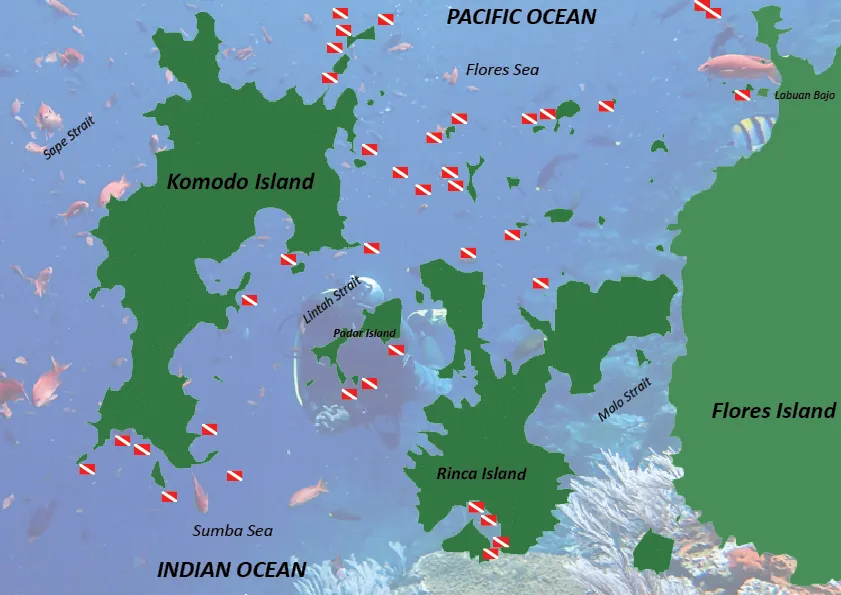
Exploring Three Sisters:
Reef type: Pinnacles / hard & soft corals
Max. depth: 40m
Current: mild to strong
Visibility: 5-20m
Discover the Wonders of Three Sisters.
If you’re looking for an exciting dive site, look no further than Three Sisters. Comprised of three pinnacles located east of Padar Kecil and just 50m offshore, each pinnacle is around 5-8m below the surface and separated by approximately 10m. While the pinnacles are often subject to strong currents, they can still be explored – either by diving at the lee site or with a little effort as you move from one pinnacle to the next, using the current to your advantage. The hard and soft corals that cover the pinnacles are home to a vast array of marine life, including Frogfish, Leaf Scorpion fish, Nudibranchs, Flatworms, and big Lionfish. Keep an eye out for an abundance of reef fish, such as Angelfish, Surgeonfish, Parrotfish, Butterfly fish, Fusiliers, and Giant Trevally. Although visibility can be limited, it typically improves at greater depths. Be sure to hook on at the end of the dive to complete your safety stop, as the currents can be strong and surging.
Exploring Pillarsteen:
Reef type: Pinnacle / wall / caves & swim through / soft corals
Max. depth: 40m
Current: mild to strong
Visibility: 5-20m
A Dive Site with Unique Topography.
Dive deeper into the world of Pillarsteen, a dive site with an intriguing topography that includes a drop off rocky wall, caves, and swim-throughs. Although it is a great option when other dive sites are affected by strong currents, it is important to note that Pillarsteen is exposed to the south, which makes it susceptible to significant surge. Don’t forget to bring a torch to fully explore the crevices and caves, as this will reveal the vibrant colors of the corals and beautiful Sea Apples. Be sure to check out the caves for hiding Groupers, Soldier fish, and if you’re lucky, a Bamboo shark. Frogfish, Ornate Lionfish, Nudibranchs, and numerous critters can be spotted along the wall. Keep an eye out in the blue for larger pelagic creatures like Mobula or Manta Rays. With a maximum depth of 40m, a mild to strong current, and a visibility range of 5-20m, Pillarsteen is a pinnacle/wall/cave & swim through/soft corals reef type that is sure to impress.
Exploring Secret Garden:
Reef type: Sloping reef / coral garden
Max. depth: 30m
Current: mild to strong
Visibility: 5-20m
Dive into the Hidden Treasure of Secret Garden
Explore a stunning and hidden underwater paradise known as Secret Garden. This dive site, located near Padar Island, is ideal for both beginner and advanced divers. Witness an array of fish and macro life in a sloping reef adorned with coral bommies and soft corals. Take a peek at Snappers, Sweetlips, Jackfish, and keep an eye out for Mobula Rays swimming in large schools. Macro enthusiasts will be impressed with the variety of Nudibranchs, Octopus, Ghost Pipefish, and Scorpion fish. With mild to strong currents and visibility ranging from 5-20m, Secret Garden is an unforgettable adventure waiting to happen.
Exploring Torpedo Point:
Reef type: Black sandy slope / patchy rocky reef
Max. depth: 20m
Current: mild
Visibility: 5-20m
A Diver’s Guide.
Located in the horseshoe bay of Nusa Kode, South Rinca, Torpedo Point offers a unique diving experience. This dive site is a black sandy slope with patchy rocky reefs, mild currents, and a visibility range of 5-20m.
Start your dive experience by descending on the black sandy slope, following the contour of the bay. Torpedo Point is known for its unusual critters and macro photographers’ paradise. Take your time to search the rocky coral patches and screen the sandy bottom for a wide variety of marine creatures, including Torpedo Rays, Flying Gurnards, Flamboyant Cuttlefish, Octopus, Frogfish, Flatworms, Nudibranchs, and Hairy Spider Crabs.
If you’re fortunate enough, you may also catch a glimpse of the Komodo Dragons roaming the beach from the boat. Don’t miss the chance to explore this hidden gem!
Exploring Cannibal Rock:
Reef Type: Seamount / Soft Corals
Maximum Depth: 40m
Current: Mild to Strong
Visibility: 5-25m
A Vibrant Seamount Covered in Soft Corals.
Cannibal Rock, located in South Rinca, is a must-visit destination for divers and marine enthusiasts alike. The seamount is adorned with colorful soft corals and teeming with marine life. As you descend along the rocky formations, you’ll be greeted by a school of Fuselier, Red Snappers, and Surgeonfish. Take a closer look at the reef and discover the diverse range of invertebrates residing there, including Nudibranchs, Frogfish, Zebra Crab, Porcelain Crab, and different species of Scorpionfish.
If you’re lucky, you might even catch sight of a Komodo Dragon roaming the beach from your boat. Don’t miss the chance to explore this remarkable location and witness its natural beauty firsthand.
Exploring the Yellow Wall:
Reef Type: Wall/Soft Corals
Maximum Depth: 40m
Current: Mild to Strong
Visibility: 5-30m
A Diver’s Paradise.
Discover the stunning Yellow Wall, a colorful underwater paradise that is perfect for divers of all levels. This beautiful wall, which starts at 5m and extends down to 50m, is adorned with soft yellow and orange corals, creating a breathtaking view. The abundance of yellow is due to the presence of Sea Cucumbers, which can be found everywhere.
The wall is teeming with a variety of marine life, including Nudibranchs, Shrimps, and Zebra Crabs on the Fire Urchins and Sea Apples. You may also encounter schooling Fusilier, Turtles, and White Tip Sharks in the deeper end of the wall.
For the best experience, it is recommended to dive in the afternoon when the sun provides natural lighting. Additionally, macro photographers will find this dive site perfect for capturing the richness of colors and species. Don’t miss out on this incredible diving opportunity!
Exploring Crynoid Corner:
Reef Type: Wall/Soft Corals
Maximum Depth: 30m
Current: Mild
Visibility: 5-30m
Located just outside the corner in the south of the Horseshoe Bay, Crynoid Corner is a must-visit spot for divers. We recommend diving in the morning to catch the breathtaking view of the morning sun.
To begin your dive, enter at the southern point and descend to roughly 25m while keeping the wall on your left shoulder. Along the way, you’ll encounter a plethora of small invertebrates. The wall is adorned with Feather Stars and is incredibly colorful. Continue to swim back and forth while gradually shallowing up.
This dive is a breeze and unaffected by current. Don’t miss out on the chance to explore Crynoid Corner’s underwater world!
Exploring Boulders:
Reef type: Boulders / soft corals
Max. depth: 35m
Current: mild to strong
Visibility: 5-30m
An Underwater Adventure.
Dive into the Boulders, a site known for its unique mixture of boulders and soft coral reefs. With a maximum depth of 35m, mild to strong currents, and visibility between 5-30m, this location is perfect for adventurous divers.
As you begin your dive, you’ll find yourself in a soft coral forest at a depth of 30-35m. Swim along the reef with it on your left shoulder until you reach the first boulder at 30m. The boulders themselves are home to a variety of coral, invertebrates, and fish. Keep an eye out for Mobula Rays, which are often spotted in this area.
Continue your dive by gradually ascending and exploring the remaining boulders. The last boulder is at a depth of around 8m, and it’s worth checking out the Coleman Shrimp and their habitat among the Fire Urchins.
Exploring Manta Alley:
Reef type: Pristine coral reef / sandy slope
Max. depth: 20m
Current: mild to very strong
Visibility: 5-25m
A Pristine Coral Reef and Sandy Slope Dive Site
Located in the bay of South Komodo, Manta Alley is a must-visit spot for diving enthusiasts. This dive site boasts a pristine coral reef and sandy slope, with a maximum depth of 20m. The current ranges from mild to very strong, with a visibility of 5-25m.
Manta Alley is best visited between September and March, when you can encounter the majestic Manta Rays. The dive begins at the shallow reef and descends along the contour of the mount towards the sandy bottom, where the cleaning station for Manta Rays is situated. In addition to the Manta Rays, the site features a diverse range of healthy coral and abundant marine life, including Reef sharks, Giant Trevally, and large Wrasses. The temperature is cooler than in other areas of the park, so it’s advisable to layer up before diving.
PT. Cari Trip Indonesia